


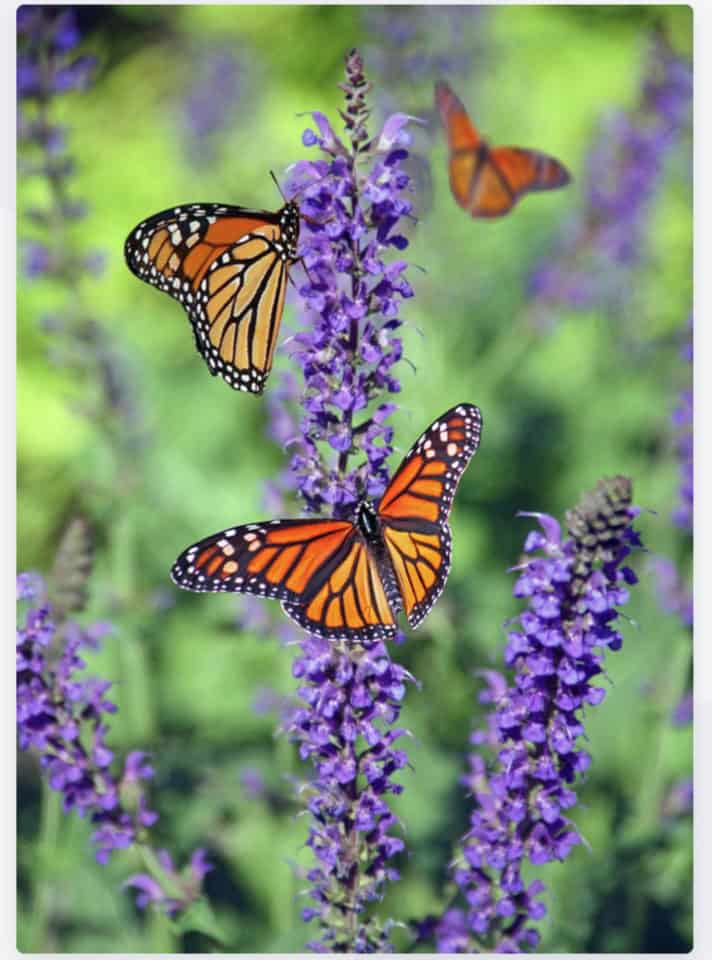
The monarch is a common and beautiful butterfly that graces our Butterfly Garden. It is best known in North America and has a powerful flight. It often sails with its wings in a “V.”
Monarchs are distasteful to predators because they obtain toxic chemicals from their food plant, the butterfly weed. Their bright coloration signals their toxicity to predators.
They are most prevalent from April to May and October to November.
Males have a black scent patch on their hind wings. Females lay their eggs on the underside of butterfly weed plants, where they develop into larvae and start eating.
These beautiful butterflies move south throughout the East in September and October, and many wind up in the fir-clad Mexican mountains. There are tremendous gatherings of these monarchs, but pressures from logging, pesticides, and other developments in that area have jeopardized them.
In spring, these overwintering monarchs start their movement northward. Along the way, they lay eggs, and several generations are produced during their migration. The offspring continue to move north, reaching the East Coast in April and May.
The care of monarchs is a rewarding hobby. A butterfly enclosure should be placed away from direct sunlight and drafts where it can be undisturbed for the duration of their life cycle.
The caterpillars eat a lot and host plants in a pot should be placed in the enclosure. Their droppings (frass) need to be cleaned daily from the enclosure as the frass can stick to the caterpillars and interfere with their metamorphosis.
The caterpillars should not be touched as their bodies can be harmed. During this period they grow for 7 to 14 days and become chrysalides. At this stage, you will see they are developing their organs, and the wing color should become apparent. Once the butterflies emerge from the chrysalides, they must not be disturbed or touched.
For 7 to 10 days they will grow the necessary organs and you will be able to see the change in the wing color. They will eventually spread their wings which must dry before they are ready for flight. This can take several hours.
When they are flapping their wings, you can allow them to walk on your finger, and they can be released or can be kept in the enclosure for up to 24 hours. If you keep them in the enclosure, prepare some nectar (dissolve three teaspoons of sugar in a cup of water) and place the nectar on a paper towel and place it in the enclosure.