


In 2025, the week of October 3 to 9 was designated as Fire Prevention Week (FPW). While that important week has passed, it’s not too late to think about fire prevention issues.
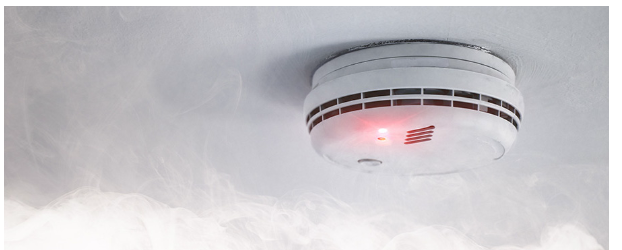
This year’s FPW campaign, “Learn the Sounds of Fire Safety!” works to educate everyone about the different sounds that smoke and carbon monoxide alarms make. When an alarm makes noises – a beeping sound or a chirping sound – you must take action.
Knowing what to do when an alarm sounds will keep you and your family safe. Make sure everyone in your home understands the sounds of your smoke and carbon monoxide alarms and knows how to respond.
SMOKE ALARMS
• A continued set of three loud beeps—beep, beep, beep—means smoke or fire. Get out, call 9-1-1, and stay out.
• A single “chirp” every 30 or 60 seconds means the battery is low and must be changed.
• Chirping that continues after the battery has been replaced means the alarm is at the end of its life and the unit must be replaced.
• All smoke alarms must be replaced after 10 years.
• If you don’t remember how old it is, replace it.
CARBON MONOXIDE (CO) ALARMS
• A continuous set of four loud beeps—beep, beep, beep, beep—means carbon monoxide is present in your home. Go outside, call 9-1-1 and stay out.
• CO alarms also have “end of life” sounds that vary by manufacturer. This means it’s time to get a new CO alarm.
• Make sure your smoke and CO alarms meet the needs of everyone in your home, including those with sensory or physical disabilities.
FREQUENTLY ASKED QUESTIONS ABOUT SMOKE AND CARBON MONOXIDE ALARMS
What’s the difference between smoke alarms and carbon monoxide alarms? Why do I need both?
• Smoke alarms sense smoke well before you can, alerting you to danger. In the event of fire, you may have as little as two minutes to escape safely, which is why smoke alarms need to be in every bedroom, outside of the sleeping areas (like a hallway), and on each level (including the basement). Do not put smoke alarms in your kitchen or bathrooms.
• Carbon monoxide is an odorless, colorless gas that displaces oxygen in your body and brain and can render you unconscious before you even realize something is happening to you. Without vital oxygen, you are at risk of death from carbon monoxide poisoning in a short time. CO alarms detect the presence of carbon monoxide and alert you so you can get out, call 9-1-1, and let the professionals check your home.
How do I know which smoke and CO alarm to choose for my home?
• Choose an alarm that is listed with a testing laboratory, meaning it has met certain standards for protection. Whether you select a unit that requires yearly changing of batteries, or a 10-year unit that you change out at the end of the 10 years, either will provide protection.
• CO alarms also have a battery backup. Choose one that is listed with a testing laboratory.
• For the best protection, use combination smoke and carbon monoxide alarms that are interconnected throughout the home. These can be installed by a qualified electrician, so that when one sounds, they all sound. This ensures you can hear the alarm no matter where in your home the alarm originates.
ADDITIONAL TIPS
• Install a bedside alert device that responds to the sound of the smoke and CO alarms. Use of a low frequency alarm can also wake a sleeping person with mild to severe hearing loss.
• Sleep with your mobility device, glasses, and phone close to your bed.
• Keep pathways like hallways lit with night lights and free from clutter to make sure everyone can get out safely.
HOME SAFETY ACTION PLAN #1
Make the first Saturday of each month “Smoke Alarm Saturday.”
A working smoke alarm will clue you in that there is a fire and you need to escape. Fire moves quickly. You and your family may have only minutes to get out safely once the smoke alarm sounds.
• Smoke alarms should be installed in every sleeping room, outside each sleeping area, and on every level of the home, including the basement.
• Test all of your smoke alarms by pushing the test button. If it makes a loud beep, beep, beep sound, you know its working. If there is no sound or the sound is low, it’s time to replace the battery.
• If the smoke alarm is older than 10 years old, you need to replace the whole unit.
• If your smoke alarm makes a “chirp,” that means it needs a new battery. Change the battery right away.
• Make sure everyone in the home knows the sound of the alarm and what to do when it sounds.
HOME SAFETY ACTION PLAN #2
Develop a home fire escape plan and practice it at least twice a year!
Having a home fire escape plan will make sure everyone knows what to do when the smoke alarm sounds so they can get out safely.
• Draw a map of your home, marking two ways out of each room, including windows and doors.
• Children, older adults, and people with disabilities may need assistance to wake up and get out. Make sure they are part of the plan.
• Make sure all escape routes are clear and that doors and windows open easily.
• Pick an outside meeting place (something permanent like a neighbor’s house, a light post,
mailbox, or stop sign) that is a safe distance in front of your home where everyone can meet.
• Everyone in the home should know the fire department’s emergency number and how to call once they are safely outside.
• Practice! Practice! Practice! Practice day and nighttime home fire drills.
• Share your home escape plans with overnight guests.
REMEMBER
When you hear a beep, get on your feet!
Get out and stay out.
Call 9-1-1 from your outside meeting place.