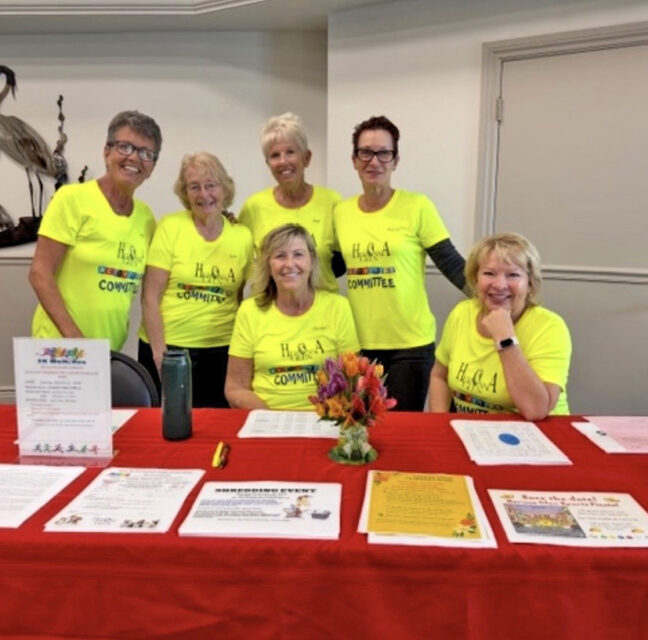


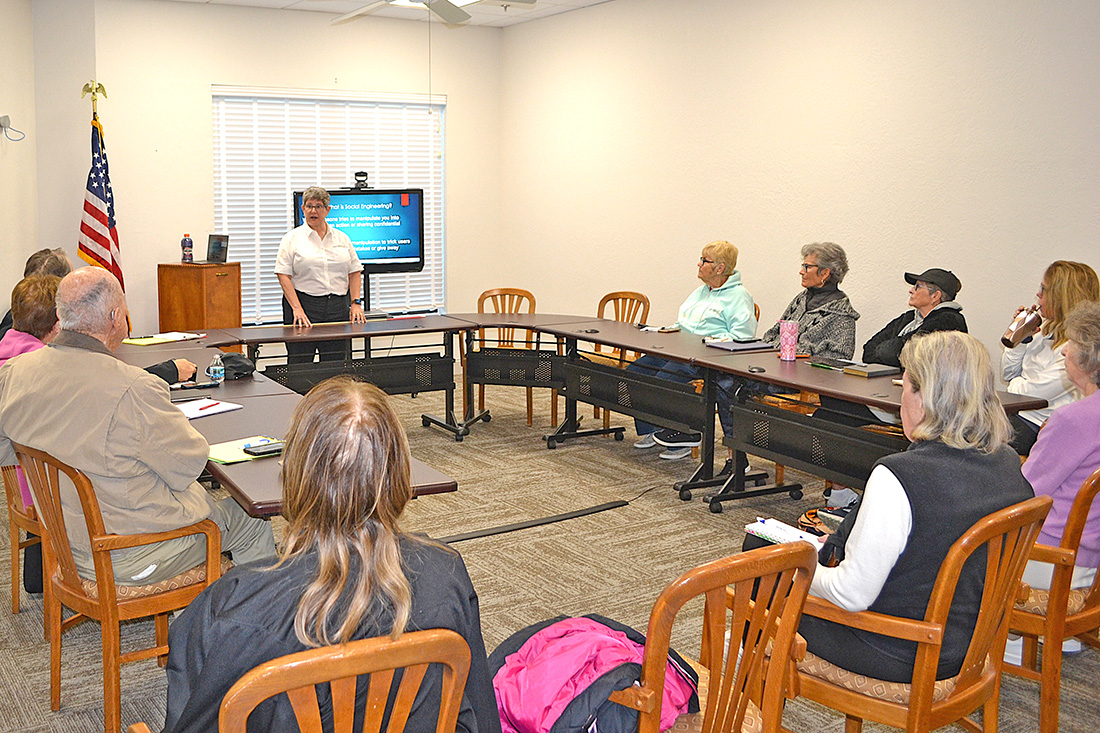
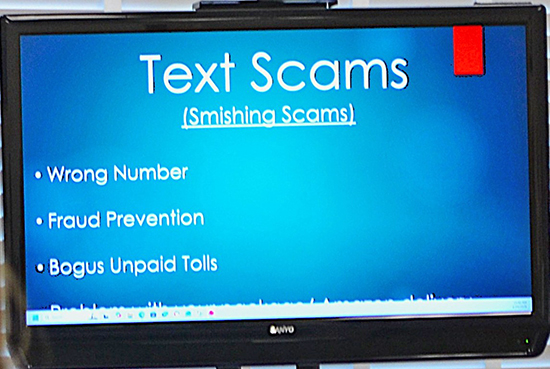
Scams! Text, smishing and pig butchering! All was discussed with residents who gathered in the HOA conference room on January 19 and 20. The two-day class, titled “Cybersecurity for Seniors,” was hosted and sponsored by the HOA Activities Committee. It drew strong interest from 44 residents eager to learn practical ways to stay safe online.
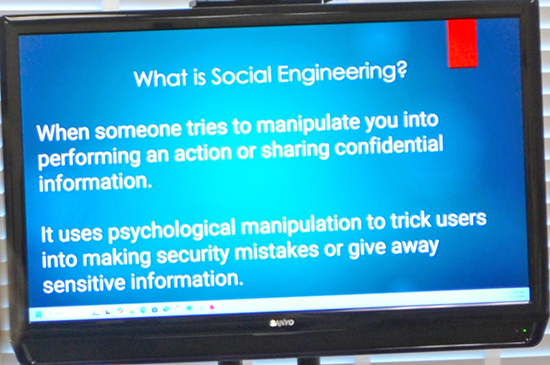
The program was presented by Lisa Carrier-Titti. She focused on learning how to recognize and avoid scams. Lisa explained that most scams rely on social engineering, a tactic that uses fear to grab attention, followed by urgency to act immediately. Victims are then asked to make payments in unusual ways, such as gift cards, cryptocurrency, or cash delivered to an associate. All red flags that residents were encouraged to remember.
One particularly eye-opening topic was the explanation of “pig butchering scams.” Lisa described how scammers slowly build trust with their targets “fattening them up” then turning that trust into a major financial scam. Attendees learned how these schemes operate and how to spot warning signs early.
Social media safety was another key area of discussion. Lisa emphasized accepting friend requests only from people you personally know and being cautious about how much personal information is shared online. How many times do we post our vacation pictures on Facebook or Instagram letting the world know we are not around to protect our home? Something to think about!
Lisa recommended the use of password managers, two-step verification or passkeys to strengthen our digital security. She stressed that password length is critical for security and encouraged residents to use unique passphrases rather than simple or reused passwords. Using your birthday or address may not be in your best interest.
WHAT WERE THE CYBERSECURITY TAKEAWAYS?
• Slow down.
• Take time to evaluate/talk to someone you trust.
• Don’t trust unexpected calls/tests/emails.
• Verify phone numbers to call back a company; don’t click links on emails or text messages.
• Monitor your bank account/credit card statements.
• Keep devices updated.
• Antivirus on computers, cell phones and tablets.
• Be careful what you share online.
• Report to Federal Trade Commission (http;//reportfraud.ftc.gov/).
The class was informative, easy to understand, and relevant in our day-to-day interactions. Attendees left the class feeling more confident when using their electronic devices such as smartphones, tablets and computers. Lisa mentioned that residents may call her any time for a personal consultation. She is available until late April.