


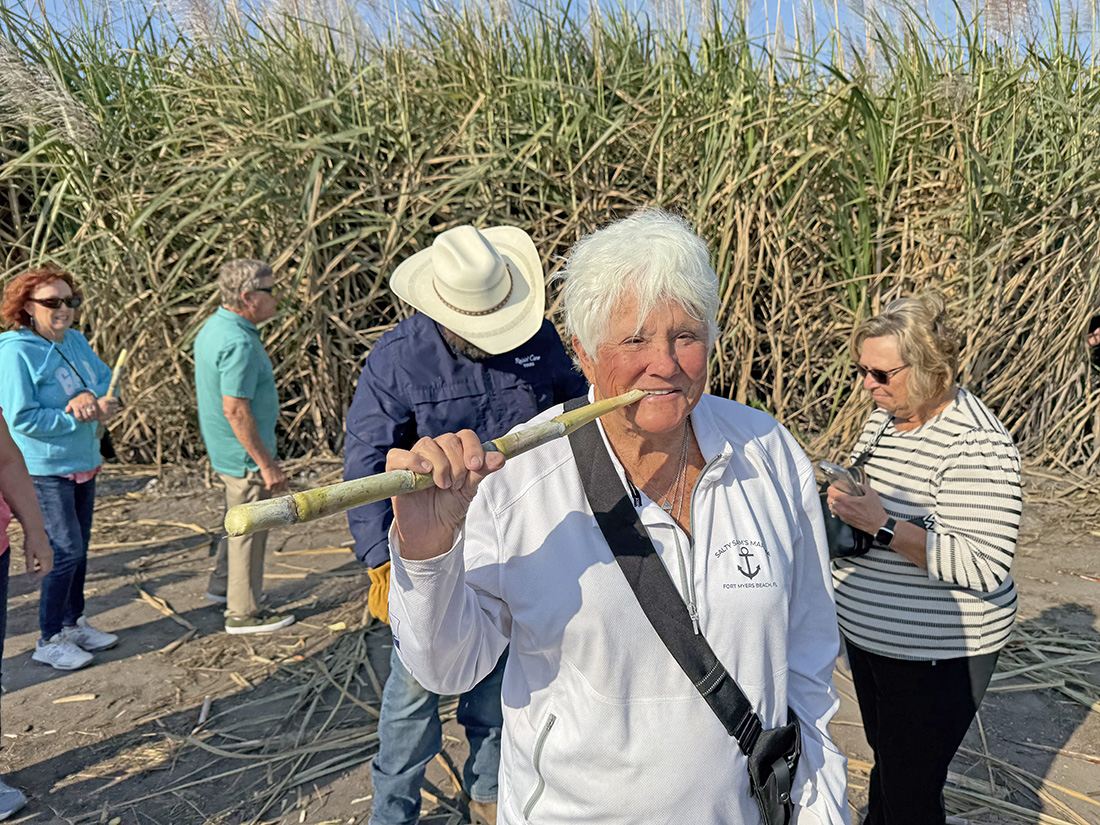
On Monday, February 12, 34 members of our HG Travel Club boarded a motorcoach and headed East to Clewiston (on the southwest side of Lake Okeechobee) to learn about Clewiston history and the significance of the sugar industry in Florida.
Florida’s sugar industry produces about half of the U.S.-grown sugar and is centered primarily around “Lake O.” Florida sugar began in the 1920s and flourished in the 1960s after the Cuban embargo. The rich black muck soil south of Lake O is ideal for sugar cane cultivation and our sugar industry quickly grew. Florida produces about 2,000,000 tons of sugar annually on about 400,000 acres of soil. The industry contributes about $4,700,000,000 to Florida’s economy, larger than corn, soybeans and cotton all put together.
Our sugar industry employs thousands of workers, and the major companies are Florida Crystals and U.S. Sugar Corporation and a Florida Sugar Coop, composed of smaller sugar companies. The industry is located primarily in Palm Beach, Hendry and Glades counties, south and east of Lake O.
The sugar industry is careful in how it manages water and phosphorous runoff from the fields. We saw irrigation canals in the fields and how the industry conserves water and uses it wisely. However, environmental groups continue to advocate land acquisition to restore natural water flow patterns to South Florida. It’s a continuing struggle between the two groups. On the one side, you have economic influence, jobs providing financial support for families in South Florida, and an important sweetener for the American population. On the other side, you have groups intent on preserving at all costs an important South Florida ecosystem – the Everglades.
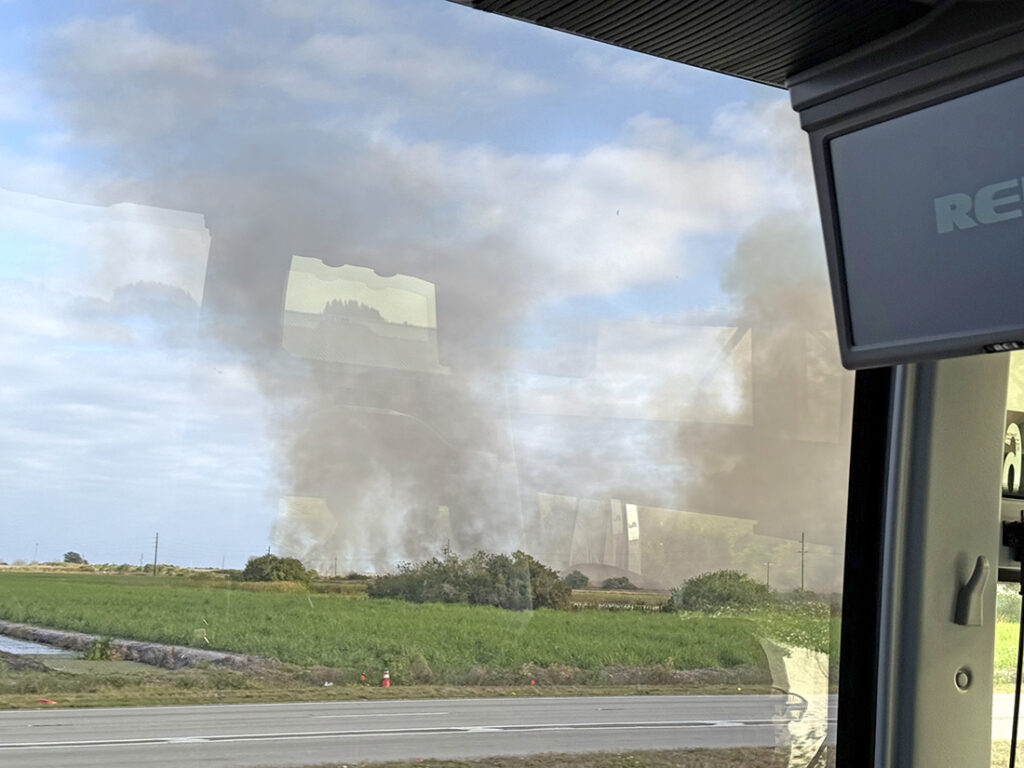
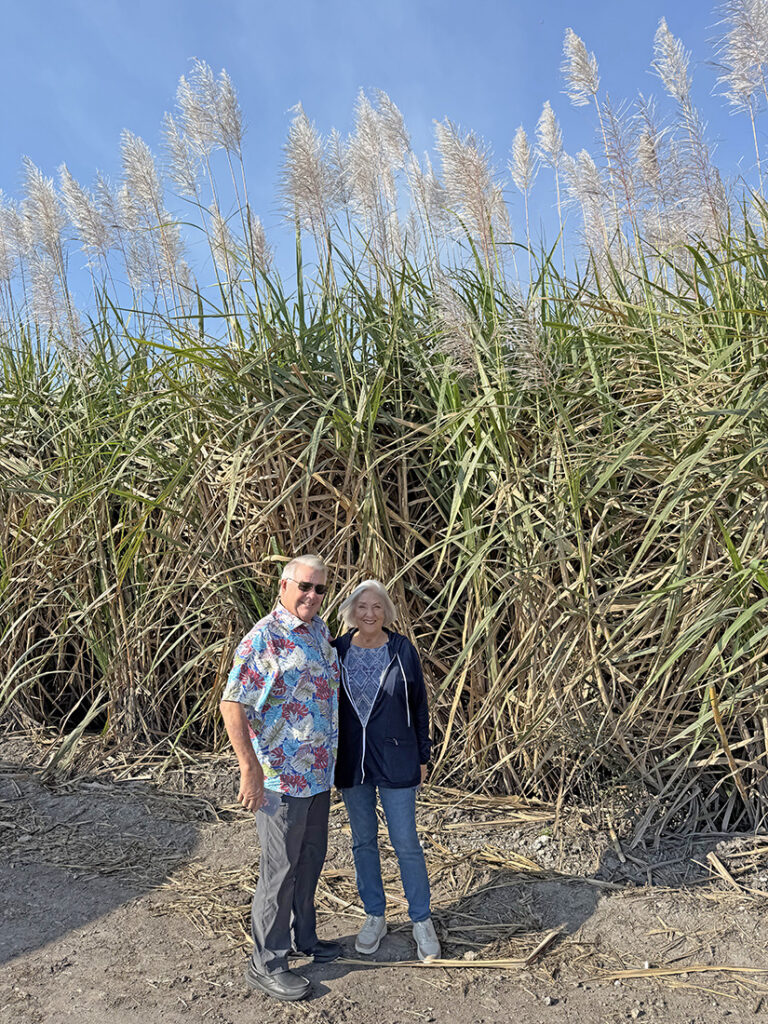
Sugarcane is not grown from “seeds”; a stalk is placed horizontally in the ground and new cane buds produce the new vertically growing stalk. It takes three to four years to produce a mature sugarcane plant. These cane stalks have large quantities of dried leaves (“leaf trash”), which is highly flammable. If left in the fields, this can slow down next season’s growth. And these leaves attached to the canes require more processing. So, the sugar growers burn the fields to eliminate the leaf trash and then later harvest the canes by cutting the canes off a few inches above ground level. The mechanical harvester then cuts the cane into foot-long sections, which is then taken to the sugar mill. The sweet juice is then extracted from the fibrous cane, and the juice is then processed into the sweet substance we buy at the grocery store. Side note: You can buy the higher priced brands of sugar or the cheaper generic store brand – but it’s all the same stuff and comes from the same processed pile of sugar at the sugar refinery.
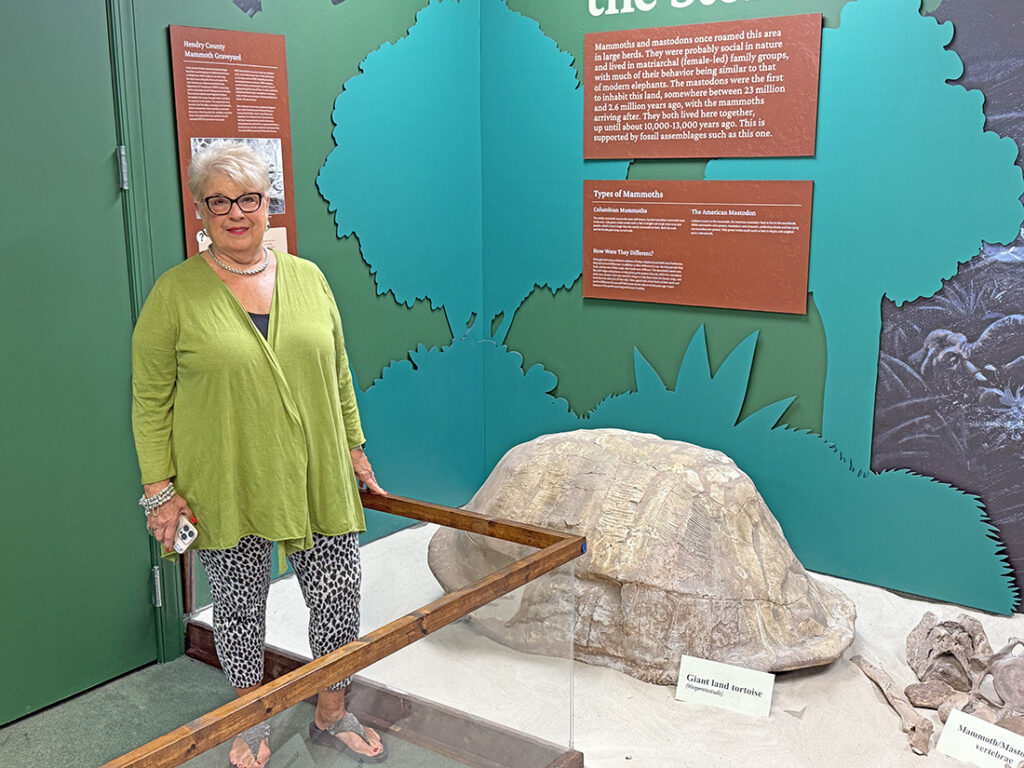
We also toured the Clewiston Chamber of Commerce Building, which houses the chamber and a wonderful museum. The museum has educational exhibits of the original Seminole people living in South Florida. The museum also has many fossilized specimens of prehistoric animals who flourished in the South Florida area eons ago, such as land tortoises, giant ground sloths, mammoths, mastodons, and saber-tooth cats. It’s difficult to believe that these kinds of animals were once common in our area. Unfortunately, these animals couldn’t adapt to the constant cyclic environmental changes that have been happening to our planet since our planet began about 4,000,000,000 years ago. One scientific fact: You can’t stop environmental change. I’m not getting political – it’s just a scientific fact.
We returned home that afternoon, after having had an excitingly educational trip to learn about this vitally important industry to South Florida and the United States as a whole.