

Even though our beautiful garden area between Herons Glen Boulevard and the lake to the left of golf hole number 18 is formally named the “Butterfly Garden”, there are myriads of other kinds of insects there also. The most numerous species of insects are in the order Coleoptera. We commonly know them as “beetles.” Insect scientists (entomologists) estimate that there are about 1.6 – 2.1 million different species of beetles. There are more different beetle species than any other kind of insect. Actually, beetles compose about 25% of all living animal species. Amazing!
So, what are some common beetle species that you might find in the Butterfly Garden, your yard, or even inside your house? Common types of beetles include ladybugs, fireflies, weevils (yes, those little animals that you sometimes find in your flour containers), Japanese beetles (the ones that eat the leaves of your rose bushes), pine beetles, carrion beetles, carpet beetles, etc. All beetles have one common characteristic, their front pair of wings are hardened instead of soft like a butterfly. These front hardened wings commonly cover and protect the back pair of soft wings and the beetle’s thorax and abdomen.
Last month, Kim Basile educated us on the value of bumblebees and their importance. But what do beetles do for us? Why are they important to our Butterfly Garden, our yards, and our economy?
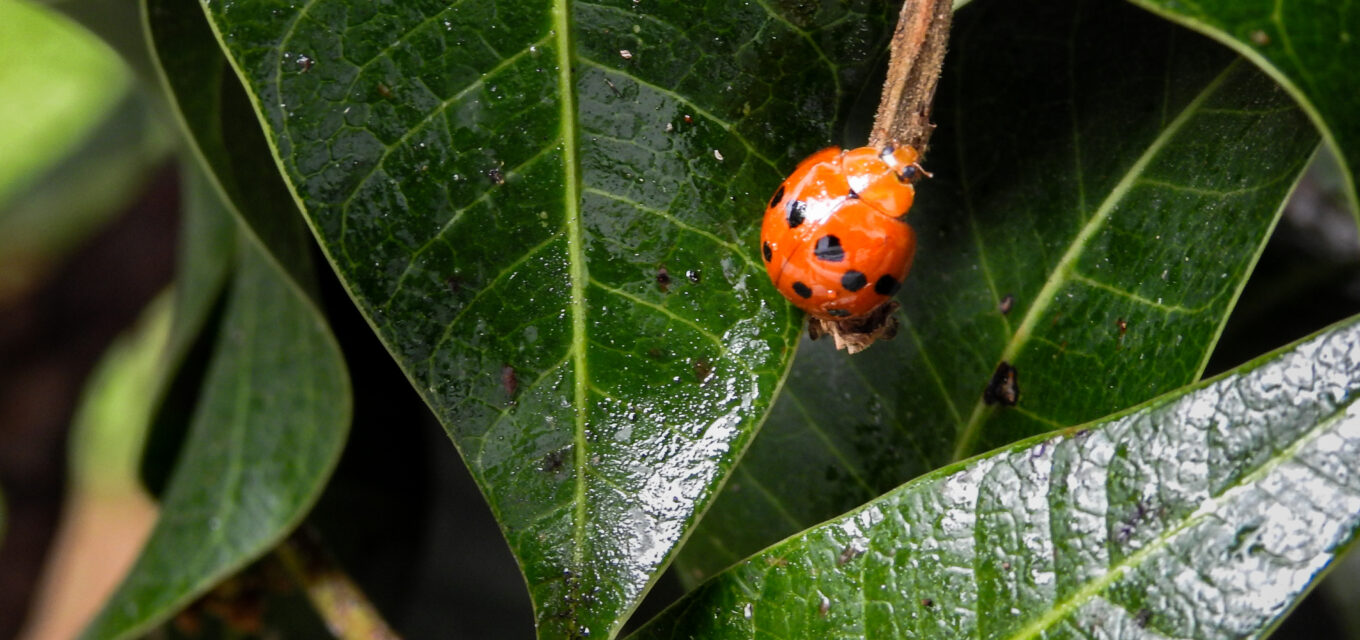
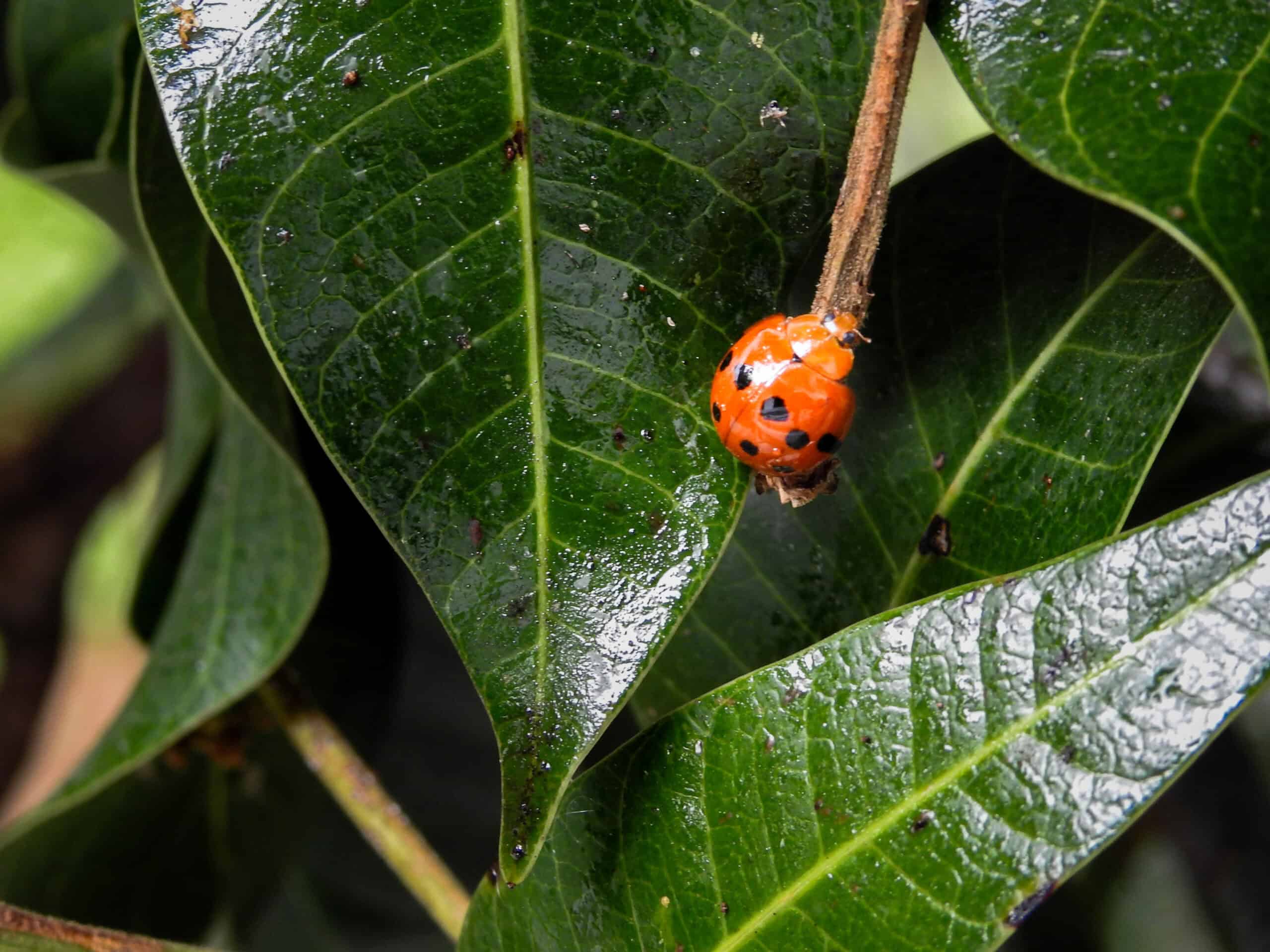
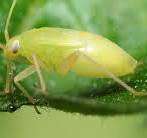
Let’s look at a very beneficial beetle, the ladybug. We are all probably familiar with distinctive ladybugs, those little, round, red insects that have small black spots on their front wing covers. A small insect that is extremely harmful to plants is the aphid. Aphids have a straw-like snout that they insert into the plant stem, leaves, or flowers. They then suck out the fluids within the plant cells for their food. If enough cells are harmed, then the plant can die. Aphids particularly love to feast on plants that we use for food, such as potatoes, peppers, cabbages, spinach, asparagus, etc. Aphids also love to eat flowers such as the iris, aster, and verbena. However, ladybugs love to eat aphids! So, ladybugs are very important in keeping our food chain strong by eating harmful aphids. Be kind to these little red and black ladybugs since they are helping us.
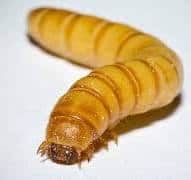
Beetles can also be used for food by humans. About 350 species of beetles are eaten by humans, normally at the larval (the caterpillar) stage. Mealworms are the larvae stage of the darkling beetle and are edible. I’ve had personal experience with this delicacy when Rhonda and I were in Cambodia at an outdoor food market a few years ago. Those fried mealworms I ate were crunchy with a nutty taste. However, I don’t have a desire to repeat that experience. Rhonda decided to pass up that culinary delight.
The three photos with this article are the ladybug, which you probably identify, an aphid, and a mealworm larva which looks like a caterpillar.
So, the next time you are in the Butterfly Garden or your yard and you see insects other than butterflies, such as beetles, remember that they are part of our natural ecosystem. Insects can be harmful to our food supply, but they can also help our food chains by eating the harmful pests. Let’s appreciate nature’s diversity.
Also, please join us at our next Butterfly Society Meeting on Thursday, October 17 at 2:00 pm in Activities Room A at the Clubhouse. We will have refreshments and a Raffle Basket. Come and join us.
Aphid
Mealworm