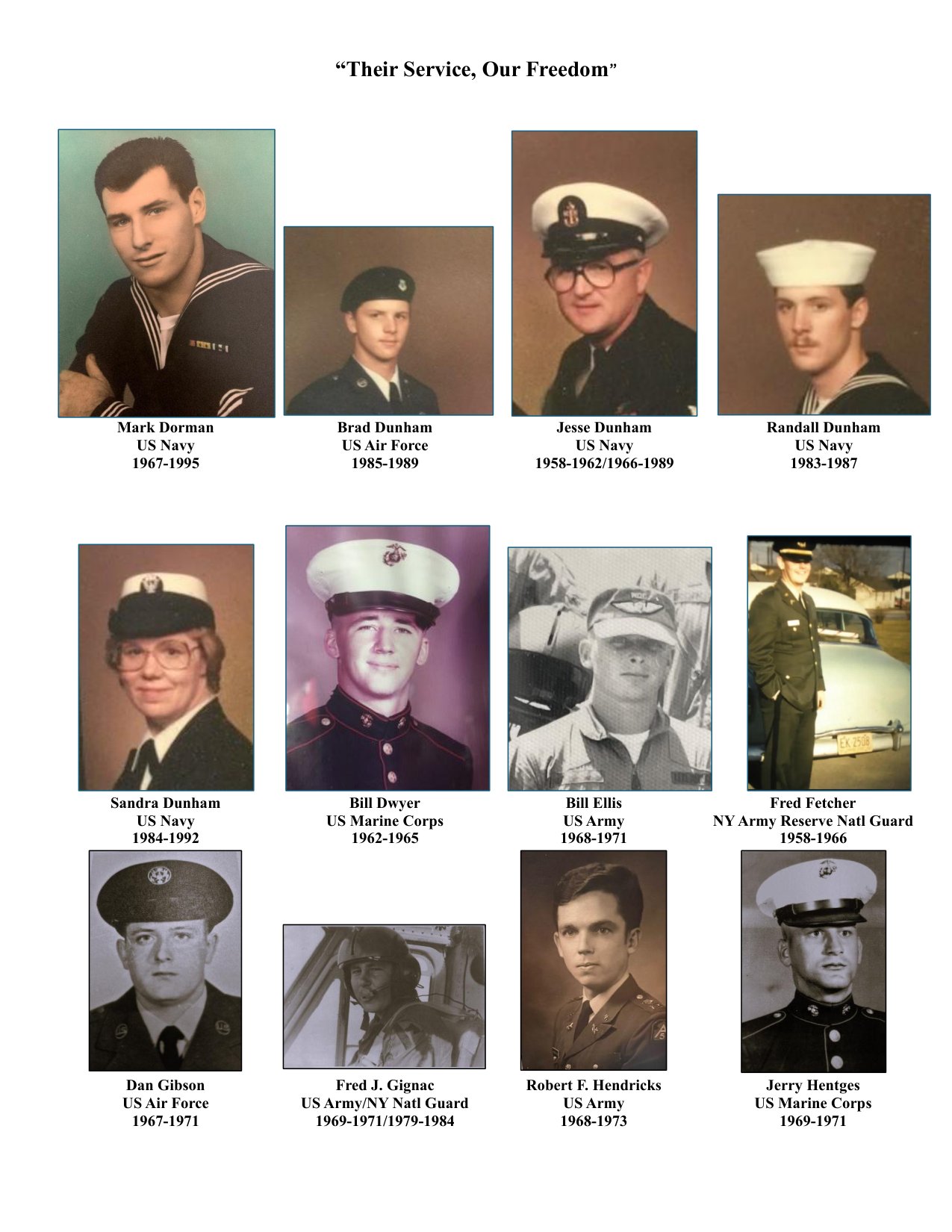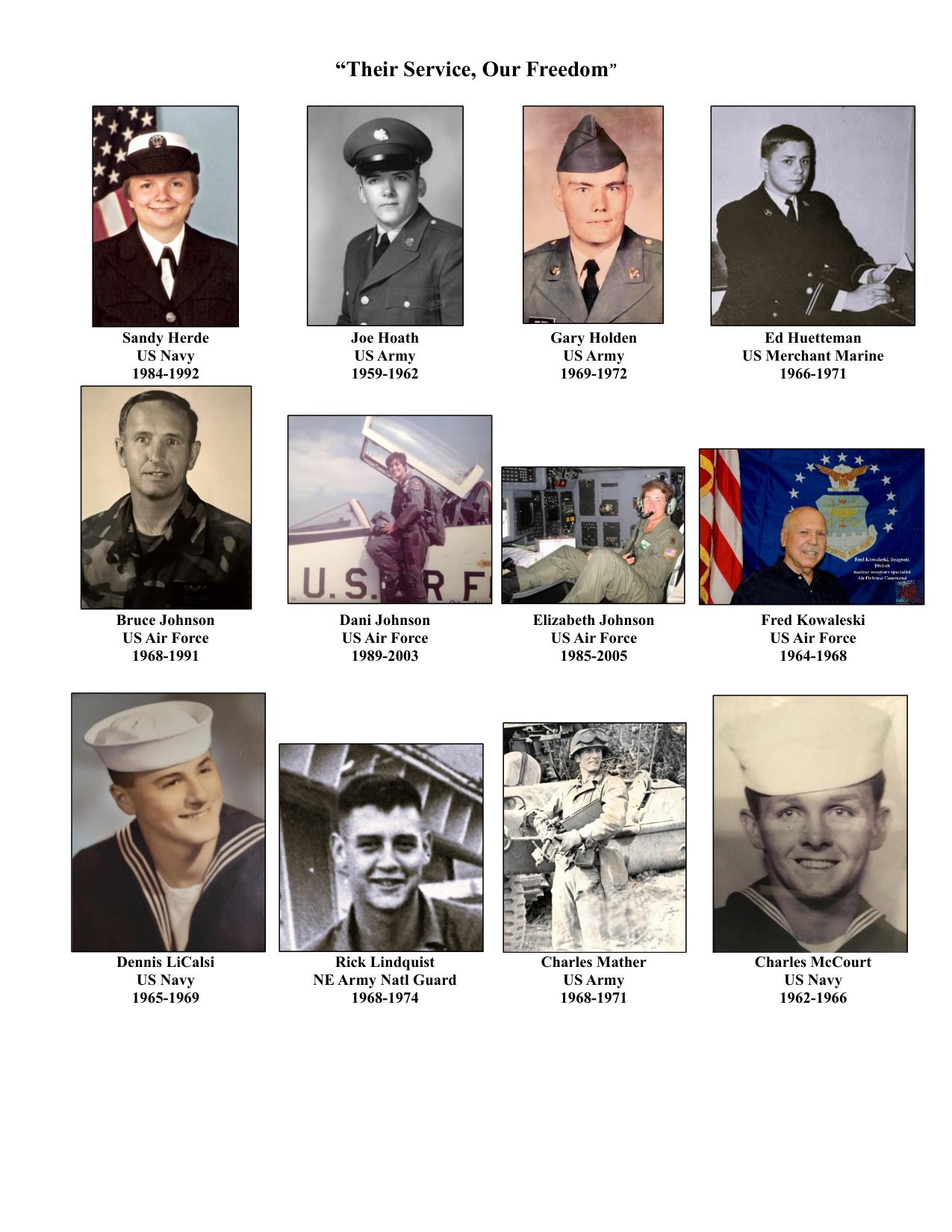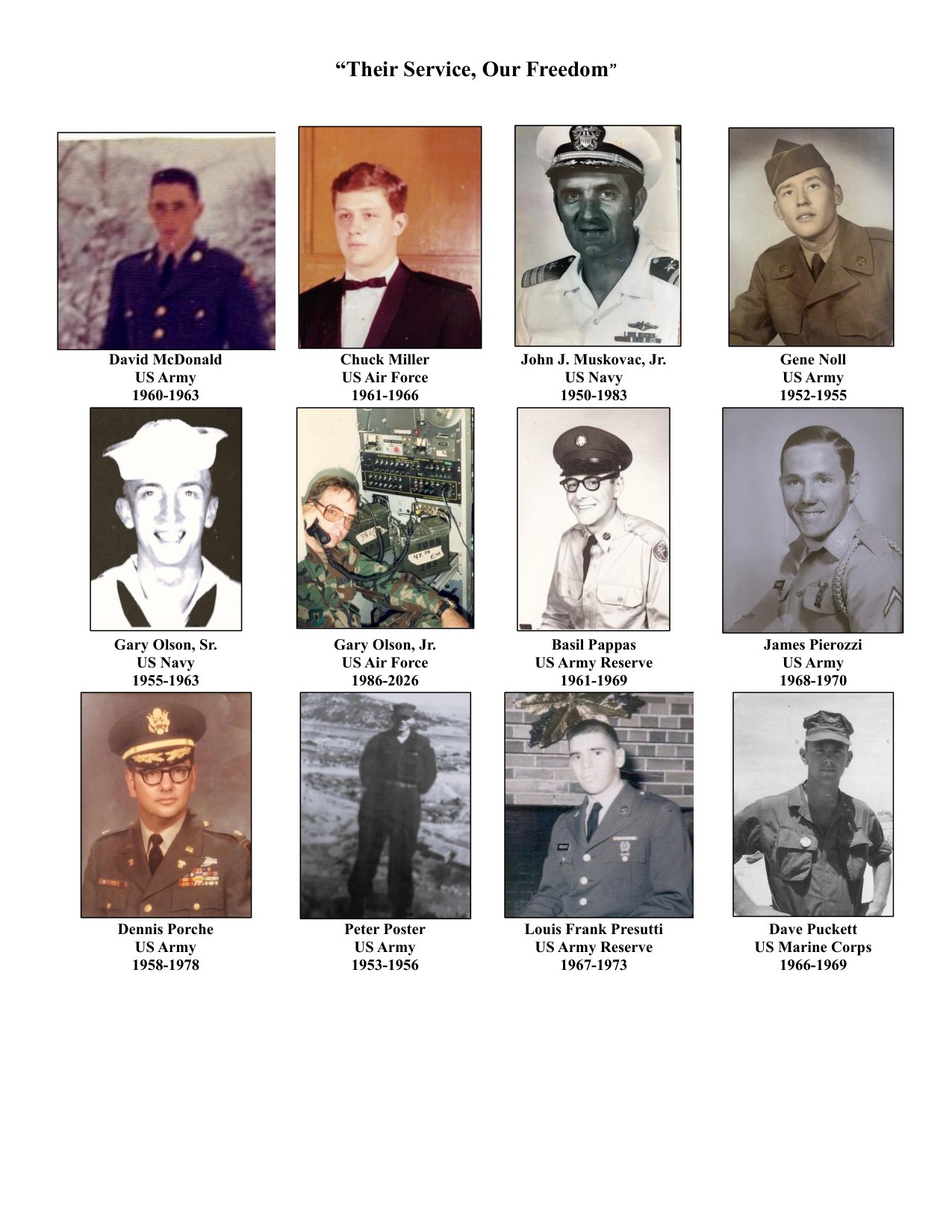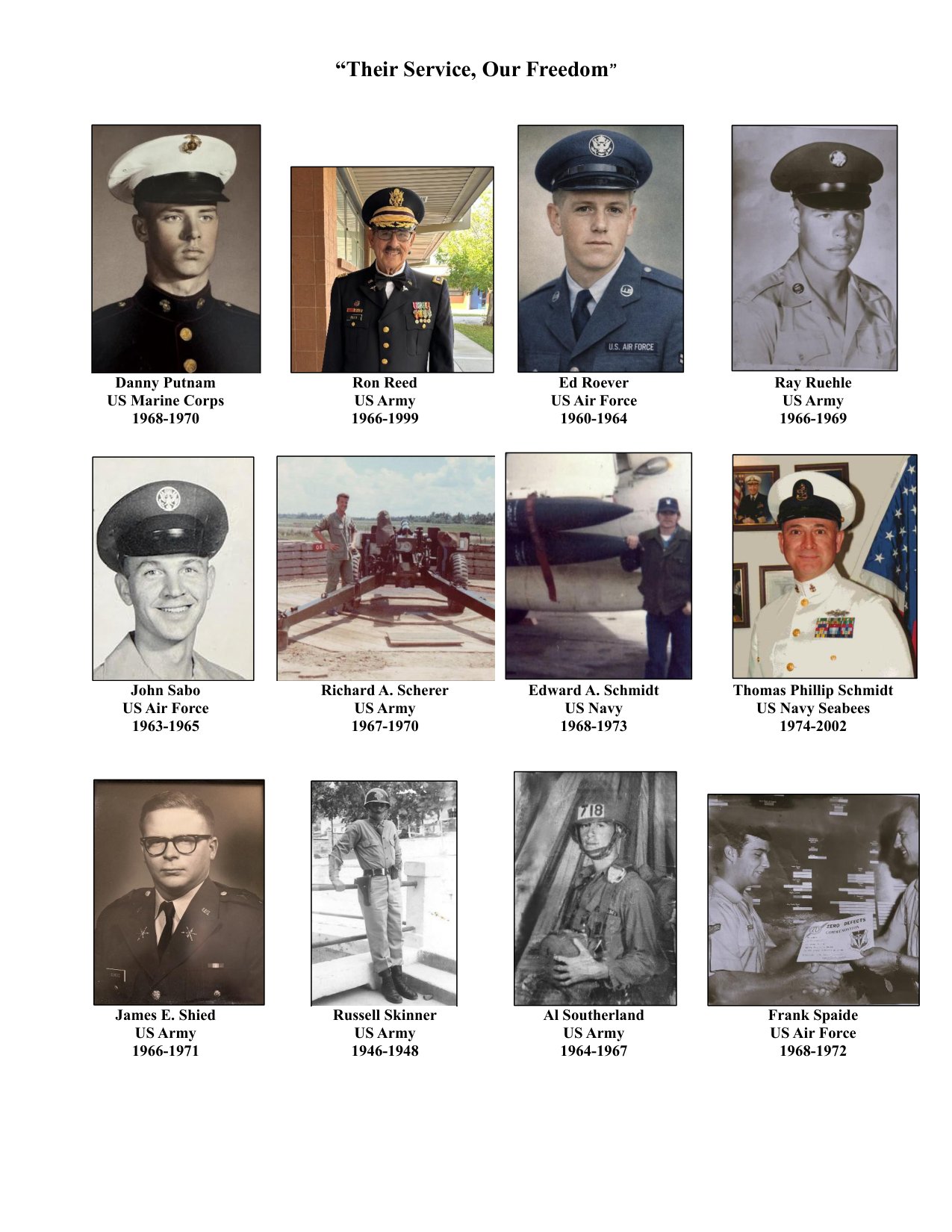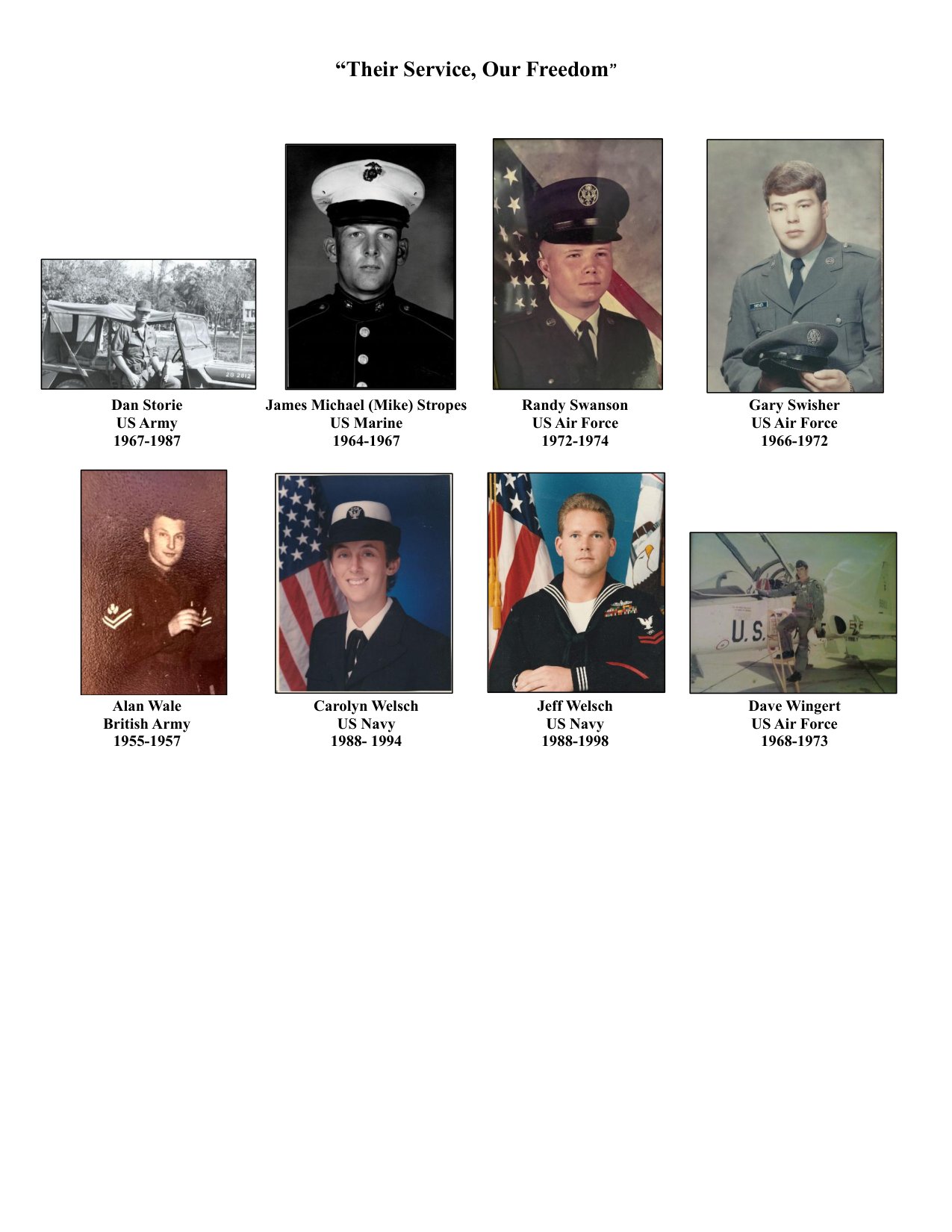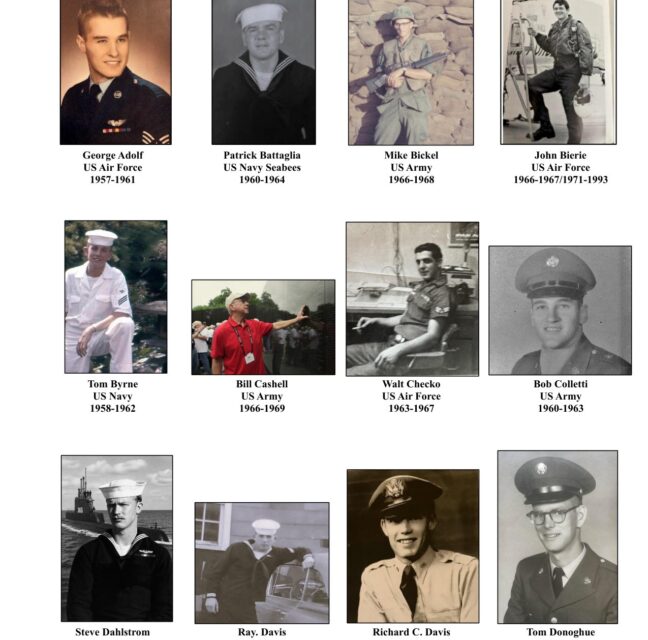


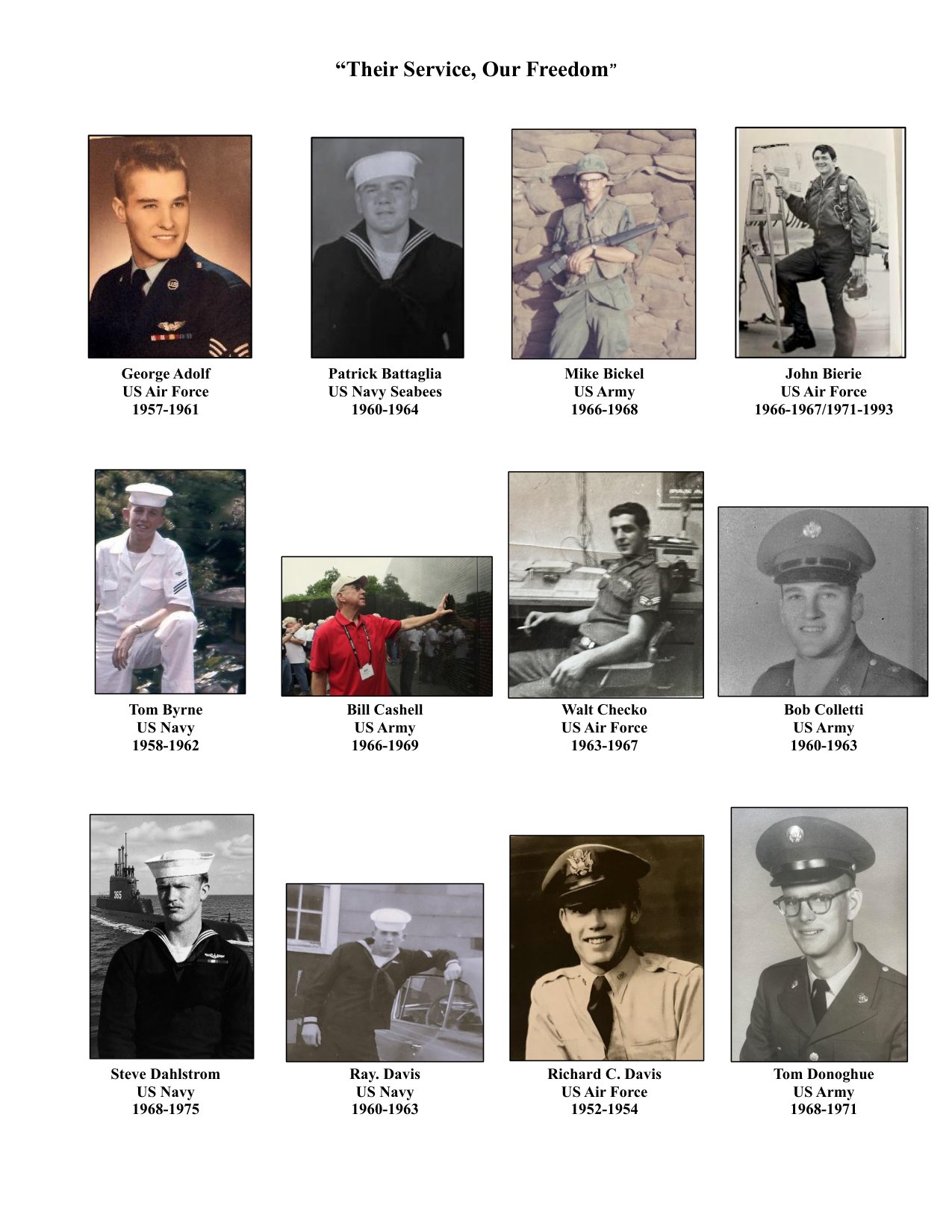
A special thank you to the Heron Glen veterans who answered our call and submitted photos for our nation’s 250th Anniversary celebration. Below are three veterans representing different eras of service during times of war in our country’s history. We’re proud to introduce them and share their remarkable stories.
WWII Veteran – Russ Skinner
Born in Massachusetts as the second of eight children, Russ Skinner learned the value of hard work early in life. As a young boy, he helped his father in the family’s candy factory, building the assets of work ethics and determination. A gifted student, Russ graduated from high school at just 16 years old.
In the fall of 1946, at age 17, Russ enlisted in the U.S. Army with a clear goal in mind: to serve his country and earn the GI Bill so he could pursue a college education. He was assigned to Italy during the Allied occupation, supporting efforts to protect U.S. interests in a nation scarred by war.
What Russ remembers most vividly is not military routine, but the heartbreaking devastation surrounding him. Homes and communities had been stripped bare. Food was scarce, resources were gone, and many families struggled simply to survive. Guards stood watch around the perimeter while local children, some only 8 to 10 years old, waited with their garbage pails in hopes of receiving leftover food from the American soldiers.
Among those children was a young girl who made a lasting impression on Russ. About ten years old, she would eagerly run to him at mealtime, hoping to be first in line. Russ quietly looked out for her. When soldiers received ice cream, he made sure she had the chance to taste this unfamiliar treat. Knowing it would melt before she reached home, he gently insisted she enjoy it right there.
Over time, Russ formed a friendship with the girl’s family. Her parents did his laundry, and he gladly paid them. It was a small but meaningful connection which benefited him with clean clothes and them with monetary compensation.
While Russ did not maintain lifelong friendships from his military years, fate offered an unexpected connection here at Herons Glen. Former resident Walter Higgins shared a remarkable coincidence: he had been aboard the very same troop ship headed to Italy, although destined for Rome.
Staying connected with home while serving overseas required patience. A phone call to the United States cost $8, impossible on his monthly pay of $21. Like many service members of his generation, Russ relied on letters sent through the mail. Correspondence often took weeks to arrive as mail traveled through government channels before reaching him. Still, he recalls one universal truth among soldiers: everyone eagerly awaited mail call.
Russ credits the military with shaping the rest of his life through lessons in discipline and respect. Honorably discharged from the Army at just 18½ years old, he had already begun planning his future. While still serving, he applied to colleges and was accepted to Northeastern University in Boston, Massachusetts. Using his well-earned GI Bill benefits, he earned a bachelor’s degree in business.
His ambitions did not stop there. Russ went on to study law, but when his GI Bill benefits ran out, he drew upon his entrepreneurial spirit to make ends meet, selling vacuum cleaners while continuing to pursue his goals.
When asked what current and future generations should understand, Russ speaks with deep appreciation for the opportunities available in America. He believes young people are fortunate to be U.S. citizens, that military service provides valuable life experience, and that educational opportunities like the GI Bill can open doors to a brighter future.
His message is simple and grounded in experience: America is a great nation built on hard work with discipline where effort brings rewards.
Korean Veteran – Gene Noll
Born and raised on a farm in Bluffton, Indiana, Gene Noll a Korean War veteran graduated from high school and enlisted in the U.S. Army with the promise of continuing his education with the G.I. Bill.
Rather than serving on the Korean front lines, he was assigned to a highly specialized and classified unit the 9524th TSU (Technical Service Unit), one of only four such units in the United States. Stationed in the Philippines for 23 months, his unit carried an important mission: monitoring atomic bomb activity and providing information that helped support frontline operations.
Military life demanded readiness at all hours. Equipment failures didn’t wait for daylight, and neither did the call to duty. As a sergeant, he was expected to respond whenever needed, day or night, to get operations running again. Security was tight, guards were posted around the clock, and dangers could come from unexpected places. Snakes were common, and one memorable encounter sent him cautiously carrying one to the hospital for identification, a lesson he never forgot.
Among his lasting memories was accompanying a Captain to the Pentagon, surprised that officials there knew exactly who they were and the work their unit performed.
Like many veterans, he built friendships which remained after the military service. A close friend, Al from New York, remained part of his life for many years, visiting Indiana after their Army days. Though his friend has since passed away, the memories remain.
Communication with home required patience. Letters traveled through the USPS mail, and a three-minute phone call once a month helped bridge the miles between the Philippines and family in Indiana.
After completing his military service, he built a successful career with AT&T and Indiana Bell Company, carrying with him the discipline and loyalty he learned during his Army years.
When asked what he is most proud of, his answer reflects his humility: his unit’s ability to pinpoint when bombs would detonate, providing valuable assistance to those serving on the front lines.
Why should we remember Korean War veterans? His answer is simple and heartfelt: pride in being an American who served his country.
And what lessons does he hope younger generations carry forward? “Loyalty to our country and dedication to U.S. service.”
Vietnam Veteran – Fred Gignac
Fred was born and raised in Niskayuna, an urban town in Schenectady County, New York, upstate New York. He attended both primary and secondary schools in Niskayuna, a lovely town where the Mohawk River flows through it.
Graduating from High School in 1964, Fred was accepted at Norwich University, a Military college located in Northfield, VT. Norwich University, the oldest of six senior military colleges is recognized by the United States Department of Defense as the “Birthplace of ROTC.” Fred completed his Reserve Officers’ Training Corp (ROTC) degree program and was formally commissioned as an officer in the U.S. Army at the age of 21. It was this military milestone that granted him the authority and responsibility of an officer. Being a commissioned officer, he was eligible to lead troops, make operational decisions, and serve in leadership roles within the military. However, he had a service commitment. In the ROTC program, he was required to serve a set number of years in the military after graduation. While in the service Fred was never afraid of serving his country. He felt he “chose his own path.” One of the most valuable lessons Fred learned at Norwich was the importance of teamwork, learning to “rely on others while understanding that others relied on him.”
In Vietnam, Fred served in the Army’s First Cavalry Division. The First Cavalry Division is known as “America’s First Team,” a highly decorated and versatile unit of the U.S. Army. He served his Army Officer Basic Training (BCT) in Fort Eustis, VA. During the Vietnam era the First Cavalry Division was known for being involved in airmobile warfare and various combat operations. For Fred, it was serving in combat as a helicopter pilot.
After Basic Training and Flight School, Fred was sent to Vietnam, specifically to III Corps which was one of four corps of the Republic of Vietnam Military Forces that existed from 1954 to 1975. III Corps oversaw the region of the country surrounding the capital Saigon and extending to the II Corps border and the Cambodian border. During the Vietnam War, the III Corps fought the North Vietnamese Army (PAVN) and the auxiliary Viet Cong (VC). He was assigned to the Phước Vĩnh Base Camp, which was a U.S. Army base north of Biên Hòa in southern Vietnam.
Like many veterans, Fred did not point to any defining moment from his years of service. However, he recalls the friendships formed along the way, particularly during his time at Norwich University and flight school.
Staying connected with home was much simpler in those days. Like many servicemen of the era, Fred relied on handwritten letters sent through the U.S. Postal Service.
Fred’s military service didn’t stop after serving in Vietnam. In fact, he continued serving in the New York National Guard from 1979 to 1984 extending his military career.
When offering advice to younger generations, Fred shares a message shaped by his experience: “opportunities will present themselves throughout life, choose your own path to serve.”
With gratitude and respect, we honor all veterans whose service, sacrifice and steadfast values continue to inspire us and help shape our history. Thank you to all our Herons Glen veterans!